
Dental Implants At Bloxdent Smiles
Dental Implants
Meet your Bloxdent Smiles Implant providers:
Mathew Emmott qualified as a dental surgeon in 1991 and has worked with Bloxdent Smiles since 2006.
Mathew is a very experienced general dental practitioner with special interests in Advanced Restorative, Surgical and Implant Dentistry having placed implants for over 25 years as well as completing an extensive postgraduate continuing professional development program.
Matthew completed the Advanced Diploma of Implant Dentistry from the Royal College of Surgeons of England in 2012 and is experienced in all aspects of implant dentistry, from single dental implant solutions to complex and full jaw cases. Matthew also provides the full range of supporting procedures, such as bone grafting, soft tissue grafts and sinus lifts as well as all aspects of oral surgery including wisdom teeth and the removal of complex tooth roots.
Mathew offers traditional and same day implant solutions after carefully assessing your mouth to ensure the safest and most effective outcome for you.
Whether you require single implant, full mouth rehabilitation or ‘teeth in a day’, placing immediate dentures on implants, Mathew uses computer guided surgery ensuring evidence-informed care restoring function and aesthetics.
Dedicated to the provision of high-quality dental care through training and development, Mathew has been involved in postgraduate education of newly qualified (foundation) dentists for over 10-years as a trainer and is involved in teaching and mentoring implant dentistry to dental surgeons.
Matthew provides Implant services in our Banbury and Chipping Norton practices.
Sahra Jabbar
BDS (Hons).London MJDF RCS Eng MSc Dental Implantology GDC 244973
Sahra provides oral surgery and dental implant treatment at our Bloxham practice. Sahra graduated from King’s College London with Honours and completed postgraduate exams with the Royal College of Surgeons. She is accredited as an advanced practitioner of oral surgery and holds a Master’s degree with Merit in Dental Implantology from the University of Bristol, having previously worked in several hospital Oral and Maxillofacial Surgery departments.
She is a member of the International Team for Implantology (ITI), the Association of Dental Implantologists (ADI) and the Royal College of Surgeons (RCS). Sahra is trained in intravenous sedation and clinical hypnotherapy techniques, and is particularly good at managing anxiety in dental patients. She teaches and supervises postgraduate dental students, and has been involved in medical volunteering both in the UK and abroad.
Why choose dental implants?
Dental implants could be the right solution for you if:
- You want a permanent, fixed solution for your loose and missing teeth
- You struggle with uncomfortable dentures
- You’d love a new confident smile
- You want the freedom to eat normally, comfortably and without worry – even crunchy apples
- You’d like an end to constant dental infections and pain caused by failing teeth

What is a dental implant?
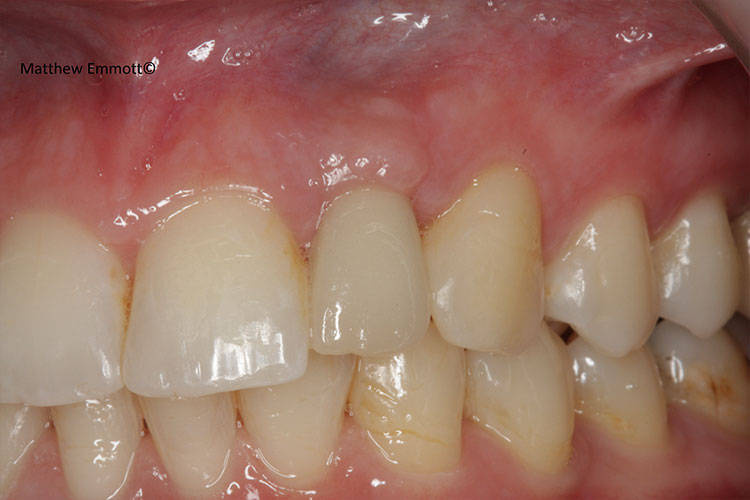
Dental implants are a long-lasting and natural-looking solution for missing and failing teeth.
They are the next best thing to your natural teeth and can be used to replace a single tooth, multiple teeth and even a full arch of teeth.
Unlike dentures or bridges, implants replace both the tooth and the root, providing a stable foundation for a crown, bridge, or denture. Implants are a clinically proven treatment that can have life-changing benefits giving you the freedom to eat without worry and to smile with confidence.
The benefits of dental implants
Dental implants could be the right solution for you if:
Restore beautiful smiles – and your confidence
- No more gaps or failing teeth
- Stay securely in place, night and day
- Clinically proven, long-lasting and durable
- Comfortable, secure eating – eat without worry
- Stable – no slipping dentures or removable plate
- Single, multiple or full arch tooth replacement
- Speedy, virtually pain-free treatment
- Care for them like natural teeth
- They restore your oral health
Am I suitable for dental implants?
Almost everyone can have Dental Implants as a fixed solution for replacing missing teeth. There are very few situations where dental implant treatment is unsuitable. At Bloxdent Smiles we are committed to finding a solution for everyone and we will always give you all the available options to help you decide what is best for you. In assessment of your options we will look at the health of your entire mouth, teeth, gums and bone density, as this will help inform the most suitable treatment. Whilst certain situations may make treatment more complex and prolonged there is rarely ‘nothing’ that can be done. We believe there is a solution for everyone.
If you’ve been told in the past that you’re not a suitable candidate for implants due to bone loss, we offer advanced techniques such as bone grafting and sinus lifts to help increase bone volume and make implants possible.
We tailor our implant solutions to your personal needs using state of the art technology and 3D imaging and digital impressions to accurately assess your bone density, jaw structure and oral health. We then create a bespoke treatment plan to discuss with you and if we don’t think dental implants are the right option for you we will talk to you about other options.
FAQs
A dental implant is made up of three key parts:
- The Implant – A small titanium post that is surgically placed into the jawbone, acting as an artificial tooth root.
- The Abutment – A connector that attaches the implant to the replacement tooth or teeth.
- The Crown, Bridge, or Denture – A custom-made restoration that looks and functions like a natural tooth.
The titanium implant fuses with the jawbone in a process called osseointegration, creating a strong and secure foundation for the final restoration.
Dental implants are a significant financial investment in your well-being and cost can be a key consideration when finding the right dental implant team for you.
At Bloxdent Smiles, clinical care is led by General Dental Council registered experienced implant dentists who are fully qualified dentists with additional qualifications and experience and who specialise in specific areas of dentistry.
Our treatment costs are all inclusive (appointments and materials: dental implants, crowns, abutments etc) and is dependent on the number of teeth to be replaced.
| Treatment | Price |
|---|---|
| Consultation | £150 |
| Single tooth implant | From £3500 |
| Bridge supporting implant (3 Teeth) | From £7700 |
| CT Scan | From £150 |
| Implant retained denture | From £8500 |
| Bone grafting | From £850 |
| Ridge expansion | From £850 |
| Sinus lift | From £495 |
| Sinus Graft | From £1500 |
The full treatment cost is always clearly outlined in your treatment plan, so you know exactly what you’ll pay. If you require any extra treatment, your dentist will discuss any additional costs before treatment begins.
If dental implants are well cared for, they can last many years, even a lifetime. Once treatment is complete, a good at-home oral hygiene routine is vital to ensure longevity of the implants, and we advise seeing your dentist and dental hygienist regularly so they can check your dental implants as part of your overall oral health and health you to keep them clean.
Normally, we find that patients only experience minor discomfort after implant placement. Any discomfort can be minimised by following the instructions below:
- Very often there will be little or no pain after the anaesthetic has worn off, however continue to take a pain killer that also acts as an anti-inflammatory which will help reduce any swelling e.g. Nurofen plus.
- You may have some swelling and/or bruising following your treatment – this usually reaches a peak 2 to 3 days later. This is quite normal and both will subside naturally after a few days. Swelling can be reduced with ice packs (or a bag of frozen peas) wrapped in a towel. Hold on the cheek area for a maximum of 10 minutes at a time with 20 minutes break.
- Minor oozing may discolour your saliva for some hours after leaving the surgery, however if bleeding continues, identify the source and apply pressure using a gauze pad soaked in warm salty water for fifteen minutes. This may be repeated 2 to 3 times, but if bleeding continues contact the surgery.
- It is a good idea to sleep with an extra pillow to lift your head for the first 2-3 nights to reduce the amount of swelling that may occur.
- Smoking should be avoided for two weeks after the procedure as this can seriously affect the success of the implant placement.
- Avoid alcohol for two weeks after the implant placement as this can impair healing.
- For the first 24 hours avoid hot food and hot drinks as this may cause bleeding
- For the first 24 hours minimise your exertion, rest, books and TV are best.
- The day after the surgery (not less than 24 hours) commence mouth rinsing with Corsodyl mouthwash.
- Please start any antibiotics prescribed, on the same day as per the instructions.
- After each meal, gently rinse your mouth with warm salt water.
- Do not brush the area where the implants have been placed for up to a week.
- If you have any concerns please contact the surgery.
Ridge expansion is a technique used to restore the lost bone dimension when the jaw ridge gets too thin to place conventional implants.
In this procedure, the bony ridge of the jaw is literally expanded by mechanical means. Bone graft material can be placed and matured for a few months before placing the implant, however, in most cases, the implants are placed simultaneously with the ridge expansion.
Ridge expansion: This is a technique of splitting a thin ridge of bone to make it wider so that an implant can be placed between the two sides of bone.
A sinus lift is surgery that increases the available bone in your upper jaw in the area of your molars and premolars. It’s sometimes called a sinus augmentation. The bone is added between your jaw and the maxillary sinuses. To make room for the bone, the sinus membrane has to be moved upward, or “lifted.”
What It’s Used For
A sinus lift is done when there is not enough bone in the upper jaw, or the sinuses are too close to the jaw, for dental implants to be placed. There are several reasons for this:
- Many people who have lost teeth in their upper jaw, particularly the back teeth, or molars, do not have enough bone for implants to be placed. Because of the anatomy of the skull, the back of the upper jaw has less bone than the lower jaw.
- Bone may have been lost because of periodontal (gum) disease.
- Tooth loss may have led to a loss of bone as well. Once teeth are gone, bone begins to be resorbed (absorbed back into the body). If teeth have been missing for a long time, there often is not enough bone left to place implants.
- The maxillary sinus may be too close to the upper jaw for implants to be placed. The shape and the size of this sinus varies from person to person. The sinus also can get larger as you age.
- Sinus lifts have become common during the last 15 years as more people choose dental implants to replace missing teeth.
Preparation
- The bone used in a sinus lift may come from your own body (autogenous bone) or from a artificial (usually bovine in origin).
- If your own bone will be used in the sinus lift, it will be taken from other areas of your mouth.
- You will need x-rays taken before your sinus lift so the implant surgeon can study the anatomy of your jaw and sinus. You also may need a special type of computed tomography (CT) scan. This scan will allow the implant surgeon to accurately measure the height and width of your existing bone and to evaluate the health of your sinus.
How It’s Done
Your surgeon will make a small incision in your gum where your back teeth used to be. The gum is raised, exposing the bone. A small, oval window is opened in the bone. The membrane lining the sinus on the other side of the window separates your sinus from your jaw. This membrane is gently pushed up and away from your jaw.
Granules of bone-graft material are then packed into the space where the sinus was. The amount of bone used will vary, but usually several millimeters of bone is added above the jaw.
Once the bone is in place, the tissue is stitched closed. Your implants will be placed four to nine months later. This allows time for the grafted material to mesh with your bone.
Follow-Up
After the procedure, you may have some swelling of the area. You may bleed from your mouth or nose. Do not blow your nose or sneeze forcefully.
If you have seasonal allergies, you should schedule the procedure when they are not active. You also will be given pain medicine, an antibiotic and an antimicrobial mouthwash to help prevent infection. Most patients have only a little discomfort after a sinus-lift procedure.
You will see the implant surgeon after 7 to 10 days. He will evaluate the surgical site and possibly remove stitches.
You will need to wait several months for the bony material to integrate with your jaw.
Risks
The main risk of a sinus lift is that the sinus membrane could be punctured or torn. If the membrane is torn during the procedure, the surgeon will either stitch the sinus tear or place a patch over it. The implant surgeon may stop the procedure and give the hole time to heal.
Your implant surgeon can redo the sinus lift once the membrane has healed. This usually takes a few months. A healed membrane tends to be thicker and stronger, which means a second attempt at a sinus lift is likely to be successful.
Infection is a risk of any surgical procedure. However, this rarely occurs after sinus lifts.
Cone beam CT provides high resolution, volumetric images that provide complete three-dimensional views of critical anatomy for more thorough analysis of bone structure and tooth orientation. Cone beam CT delivers accurate scans with images comparable to medical CTs with a much lower radiation dose, in-chair patient positioning (as opposed to a tunnel) and quicker scan times.
Cone beam CT is different from typical dental X-rays that focus on a small area to produce flat, 2-D pictures. 3-D cone beam images provide more complete, accurate, and visual images to study your case, with greater accuracy and less radiation than ordinary medical CT machines. 3-D cone beam images can be duplicated and are always stored in case they are needed in the future.
Dental Implants: 3D CT scans allow the implant surgeon and to optimally plan and place dental implants.
Place & Restore with Accuracy & Confidence
From analysis, through planning and placement, to complete restoration, the cone beam ct scan allows the implant surgeon, surgical predictability with treatment planning in full 3D with restorative outcomes in mind. The cone beam ct scan’s high resolution, volumetric images provide complete 3D views for more thorough analysis of bone structure and tooth orientation.
Exact dimensions are able to be measured which allows accurate positioning of implants. The ability to accurately measure dimensions is of paramount importance with more complex implant cases.
Software that we use at the Bloxham Dental Practice allows the implant surgeon to place implants on the scan prior to the implant surgery allowing detailed planning of an entire course of treatment from surgical placement of the implant and abutment, all the way to final restoration, so not leaving anything to chance. An extensive library of implant templates affords best possible selection of suitable implant type, size, location, and angulations prior to surgery.
